
Best Time to Take Creatine: Before or After Workout? The Honest Answer (2026)
Creatine timing barely matters. Take it daily, including rest days, and your muscles will saturate over 3-4 weeks regardless of whether you swallow it pre-workout, post-workout, with breakfast, or at midnight. The “anabolic window” framing applied to creatine is wrong. It doesn’t work like protein. It works through saturation, not acute delivery.
There’s one small caveat the research supports: a few studies show post-workout creatine has a slight edge for muscle mass gains specifically. The effect is real but small, and it disappears when you zoom out across larger samples. For 95% of lifters, the answer is “take it when you’ll remember.” For the other 5%, post-workout with carbs is the edge play.
Here’s the actual research, why so many articles get this wrong, and the only timing rule that actually matters.
TL;DR: When to take creatine
- Easiest answer: Take 5g daily, any time, including rest days. Consistency matters more than timing.
- Marginal edge: If you want to optimize, take it post-workout with carbs or protein. The effect is small but real.
- Worst time: Skipping doses on rest days. That breaks saturation.
- Doesn’t matter: Pre-workout vs. with breakfast vs. before bed. Pick what you’ll actually do.
That’s it. The rest of this article exists for people who want to understand why.
Why “timing” is the wrong frame for creatine
Most timing advice you see online is borrowed from protein research. The “anabolic window” idea, that you have a 30-60 minute post-workout window to maximize gains, was originally about protein synthesis after resistance training. Even for protein, that window turned out to be much wider than people thought.
Creatine doesn’t work like protein at all. Here’s what’s actually happening:
Your muscles store creatine as phosphocreatine. A normal person eating a typical mixed diet has muscle stores sitting at 60-80% saturation (you get small amounts from meat and fish). Supplementation slowly raises those stores to 90-100% saturation over 3-4 weeks of consistent daily use.
Once saturated, your muscle creatine doesn’t drop back to baseline because you took your dose 6 hours after a workout instead of 30 minutes after. It’s a topped-off reservoir, not an acute delivery system. The phosphate group donation that helps regenerate ATP during heavy lifting? That’s happening continuously, fueled by your existing intramuscular creatine stores, not the scoop you took an hour ago.
This is why the timing question is mostly a distraction. The actual question is: are your muscle stores saturated? And the answer to that comes from daily consistency over weeks, not perfect timing on any individual day.
What the research actually says
There IS research on timing. Let me walk through it honestly.
The 2013 Antonio & Ciccone study
The most-cited timing study is Antonio and Ciccone 2013, published in the Journal of the International Society of Sports Nutrition. They took 19 recreational bodybuilders, split them into two groups, and had one group take 5g of creatine immediately pre-workout and the other take 5g immediately post-workout for 4 weeks of resistance training.
The result: the post-workout group had slightly better gains in fat-free mass and slightly better bench press strength. The authors concluded “consuming creatine immediately post-workout is superior to pre-workout.”
This study is the source of basically every “take creatine post-workout” article on the internet.
The problems with the study:
- Only 19 participants (split into groups of 9 and 10)
- Only 4 weeks long
- Some participants didn’t follow the protocol on non-training days
- The strength difference was marginal
It’s a real study, but it’s a small one. Treating it as definitive is overreach.
The 2018 meta-analysis
A meta-analysis in the Journal of Exercise and Nutrition pooled three available timing studies and found that post-workout creatine showed a small but statistically significant advantage for muscle mass gains (standard mean difference 0.52, p = 0.04). For strength gains, there was no significant difference between pre and post.
Translation: across three studies pooled together, post-workout creatine produced slightly more muscle mass than pre-workout. The effect was real but small (an SMD of 0.5 is considered moderate). For strength gains, timing didn’t matter at all.
The 2022 Frontiers study (the killer detail)
This is the one that quietly settled the debate. A 2022 study in Frontiers in Sports and Active Living ran an 8-week trial on male and female collegiate athletes specifically testing pre vs post creatine timing.
The finding from the broader research context: “differences between pre- and post-workout supplementation became statistically insignificant when viewed across longer timeframes and larger sample sizes. The research found that total daily creatine intake mattered far more than the specific timing of doses.”
That’s the line that should end every timing debate. When you zoom out, the timing signal disappears into the noise. Total daily creatine intake is what matters.
What about older adults?
There IS one demographic where post-workout timing shows a more consistent effect: older adults (50-71 years). A 32-week study in healthy older adults found post-workout creatine produced greater lean mass than pre-workout. The mechanism might be related to age-related changes in muscle protein synthesis sensitivity. Worth knowing if you’re in that demographic, but not relevant for the average 20-40 year-old lifter.
So what’s the actual answer?
Three honest tiers of timing advice:
Tier 1: For 95% of lifters
Take 5g of creatine daily. Any time. Done.
You can take it with breakfast, in your pre-workout shake, in your post-workout shake, before bed, with dinner, in your morning coffee. None of it matters more than the consistency itself. The single biggest predictor of whether you’ll see results is whether you’ll actually take it daily.
The trick is to attach it to a habit you already have. Most lifters who succeed with creatine pick one of three:
- Mix it into their morning coffee or breakfast smoothie
- Drop it into their pre-workout shaker (whether they train mornings or evenings)
- Add it to their post-workout protein shake
Pick the one you’re most likely to actually do every day. That’s the right time for you.
Tier 2: If you want the marginal edge
Take 5g post-workout with carbs and protein.
The mechanism: insulin and elevated blood flow post-exercise may slightly improve creatine uptake into muscle cells. Adding carbs (10-50g of fast carbs) and protein (20-30g of whey) bumps insulin and theoretically improves transport.
The effect is small. The meta-analyses suggest you might get a slight muscle mass bonus, no strength bonus. For most people, the difference isn’t worth the logistical hassle of timing it precisely.
If you’re a competitive bodybuilder or physique athlete where 0.5 lb of lean mass over 6 months matters, this is worth doing. If you’re a normal lifter, it’s a rounding error.
Tier 3: If you’re 50+
Post-workout creatine with food may actually matter for you. The research is more consistent in older populations. Try to take your 5g within 30 minutes of finishing training, paired with some protein and carbs.
The myth: “Take it pre-workout for energy”
Creatine doesn’t give you acute energy. Stop expecting it to.
This is the most common misconception I see. People hear “creatine boosts performance,” assume it works like caffeine, and take it 30 minutes before training expecting to feel something. They feel nothing. They conclude creatine doesn’t work and quit.
What’s actually happening: creatine works at the cellular level by raising your phosphocreatine stores. Those raised stores let your muscles produce force for longer during heavy sets. You’ll notice it after 3-4 weeks as “I’m getting more reps” or “the same weight feels lighter on set 3.” You will not notice it 45 minutes after taking your daily scoop.
If you want acute energy pre-workout, take caffeine. If you want long-term strength and lean mass, take creatine consistently. They’re different problems with different solutions, which is why we wrote a whole article on creatine vs pre-workout stacking.
The actual timing rule that matters
If I had to give one piece of timing advice that genuinely makes a difference, it’s this:
Don’t skip rest days.
This is the one thing 90% of lifters get wrong. They take creatine on training days because that’s when they think about supplements. They skip rest days because “I’m not lifting, so I don’t need it.”
Wrong. Creatine works by saturating your muscle stores. Skipping rest days means your stores deplete slightly, then partially refill on your next training day, then deplete again. You’re stuck at 80-85% saturation forever instead of hitting 95-100%.
This is the single biggest “timing” mistake. Set a daily reminder. Take it every day for 30 days. Then you’ll be at full saturation and can start to actually evaluate whether it’s working.
The carbs + creatine question
You’ll see this advice in many articles: “Take creatine with carbs for better absorption.”
The original research on this is from a 1996 study showing that consuming creatine with a large dose of carbohydrate (90g) raised muscle creatine uptake. The mechanism is insulin-mediated transport.
Three things worth knowing:
- The effect is real but small
- 90g of carbs is a lot of carbs (about 6 slices of bread)
- Most lifters aren’t going to chase their creatine with that much sugar daily
A more practical version: if you’re going to take creatine post-workout anyway, throwing it in your protein shake (which usually has some carbs from sweeteners or natural ingredients) probably gives you a small uptake bonus. Don’t engineer your nutrition around it.
On rest days, just take it with whatever you’d eat anyway. The marginal benefit from carbs doesn’t justify forcing them into your day.
Should you load creatine?
Quick detour because this comes up every time someone asks about timing.
Loading protocol: 20g per day, split into 4 doses of 5g, for 5-7 days. This saturates muscle stores faster (about 1 week instead of 3-4 weeks of regular dosing).
No-load protocol: 5g per day. Saturates muscle stores in 3-4 weeks.
Both reach the same endpoint. The difference is whether you want to be saturated by week 1 or week 4.
Most lifters skip loading because:
- High doses cause GI issues for some people (cramping, loose stools)
- The 3-4 week wait isn’t a big deal
- Buying 20g/day for a week burns through your tub faster
If you’re starting a 12-week training block and want to be saturated by week 1, load. If you’re just adding creatine to a long-term routine, skip loading and start at 5g daily. Either way, the timing of those doses doesn’t matter much. Spread out across the day during loading, single daily dose afterward.
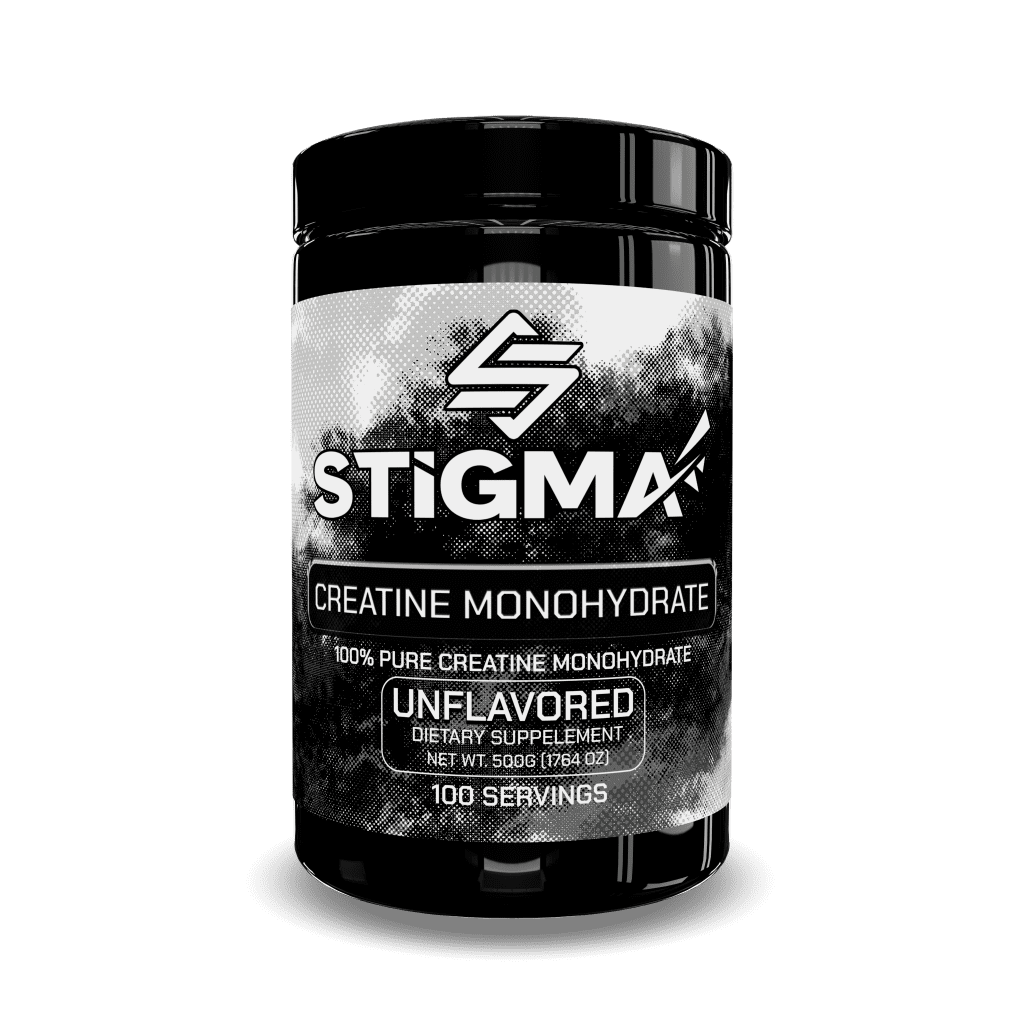
5g of pure creatine, any time you take it
Micronized for clean mixing, unflavored to drop into anything, and 100% pure monohydrate. No fillers, no proprietary blends, no excuses.
- 5g micronized monohydrate
- 60 servings per tub
- Unflavored, easy to stack
- Mixes clean in any liquid
- No fillers, no junk
- Third-party tested
Specific timing scenarios
Let me cover the situations that actually come up.
“I train fasted in the morning”
Take it with whatever you eat post-workout. Or with breakfast. Or in your morning coffee. If you train completely fasted and want to skip food until later, take it with water at any point in your morning routine. There’s no fasted-state penalty for creatine.
“I train in the evening after a long day”
Take it whenever you’re most likely to remember. With breakfast is a great anchor for evening trainees because it removes the “did I take it after my workout?” question. By the time you’re driving home tired and hungry post-gym, you’ve already taken your daily dose 10 hours ago.
“I’m doing intermittent fasting”
Creatine has zero calories and doesn’t break a fast. Take it in your fasted window with water, or with your eating window food. Both work. The “creatine breaks a fast” claim you’ll occasionally see online is false.
“I’m on a cut”
Same dose, same timing. Cutters sometimes drop creatine because they don’t want the water weight. Don’t. The 1-3 lbs of water creatine adds is intramuscular (inside the muscle cell) which actually helps your physique by making muscles look fuller. It’s not subcutaneous bloat. Keep taking it during a cut.
“I’m doing two-a-days”
Take your daily 5g once. You don’t need to split doses around each workout. Take it with your largest meal of the day and call it done.
“I forgot for two days, do I need to load again?”
No. One or two missed days drops your muscle creatine slightly but not dramatically. Pick back up at 5g daily and you’ll be back to full saturation within a few days. Don’t double up.
Things that don’t matter
A few timing-adjacent claims you can safely ignore:
Cycling creatine. You don’t need to “cycle off” creatine. The “load 4 weeks, off 4 weeks” advice from old bodybuilding magazines isn’t supported by current research. Take 5g daily, indefinitely.
Empty stomach vs full stomach. Doesn’t meaningfully change absorption or saturation rates over a few weeks. Eat normally.
Hot vs cold water. Mix it however you want. Heat doesn’t degrade creatine at room or beverage temperatures. The “creatine breaks down in hot drinks” myth is overstated.
Time of day. Morning vs evening vs night, no measurable difference for muscle saturation.
With or without protein. Doesn’t significantly change anything. If you take it with your protein shake out of habit, fine. If you take it with water, also fine.
What does matter for creatine results
Since this is a timing article, let me close with what actually moves the needle:
1. Daily consistency. Take it every day for at least 30 days before evaluating.
2. Adequate dose. 5g daily. Not 2g. Not 3g. The clinical effective dose is 5g.
3. Training that justifies it. Creatine works by enhancing training adaptation. If you’re not training with progressive overload, the benefit is small.
4. Protein intake. 1.6-2.2g per kg bodyweight daily. Creatine without adequate protein gives suboptimal results.
5. Sleep. Recovery is when adaptation happens. 7+ hours of sleep matters more than your creatine timing.
If you nail those five, your creatine will work. If you miss any of them, perfect timing won’t save you.
Frequently asked questions
Should I take creatine before or after a workout? Either works. Post-workout has a small statistical edge in some studies for muscle mass gains (not strength). The effect is small and disappears in larger samples. For most lifters, consistency matters more than timing. Pick whichever you’ll actually do every day.
Is it better to take creatine pre or post workout? Slight edge to post-workout in pooled meta-analysis data, but the effect is small (0.5 standard deviation for muscle mass, no effect on strength). If you want to optimize, post-workout with carbs and protein. If you want simplicity, any consistent daily time works.
When should I take creatine on rest days? Any time. The whole point is daily consistency. Take it whenever fits your normal routine: with breakfast, lunch, dinner, or before bed. Skipping rest days breaks muscle saturation.
Can I take creatine before bed? Yes. Creatine has no stimulant effect and doesn’t disrupt sleep. Many lifters take it at night specifically because they remember it as part of their wind-down routine.
Does creatine work better with food? Marginally. Insulin from carbs and protein may slightly improve creatine uptake into muscle cells. The effect is small. For most lifters, taking it with whatever you’d eat anyway is the right call. Don’t engineer extra carbs just for creatine.
How long does it take for creatine to work? 3-4 weeks with daily 5g doses to reach full muscle saturation. 5-7 days with a loading protocol (20g/day split into 4 doses). You won’t feel anything acutely. You’ll notice it as better training output over weeks.
What happens if I miss a dose? Nothing significant. One or two missed days drops your muscle creatine slightly. Resume your daily 5g and you’ll be back to full saturation in a few days. Don’t double up.
Should I cycle creatine? No. The “cycle on and off” advice from older bodybuilding sources isn’t supported by research. Take 5g daily indefinitely. Healthy kidneys handle it fine long-term per the ISSN position stand.
Is there a wrong time to take creatine? The only “wrong” timing is missing doses. The pre vs post workout debate is overhyped. Skipping creatine on rest days is the actual mistake most beginners make.
Keep reading
If you’re dialing in your supplement stack:
- Stigma Creatine Monohydrate: 5g micronized monohydrate per scoop, unflavored, 60 servings
- Stigma Pre-Workout: 8g citrulline, 325mg caffeine, transparent label
- Stigma Whey Protein Isolate: 25g premium isolate for clean recovery
- Stigma Hydration & Performance: Zero-sugar electrolytes
- Related read: Creatine vs Pre-Workout: Which One (Or Both?)
- Related read: Whey Isolate vs Concentrate: The Honest Comparison
Sources and references
- Antonio, J., & Ciccone, V. (2013). “The effects of pre versus post workout supplementation of creatine monohydrate on body composition and strength.” Journal of the International Society of Sports Nutrition, 10:36. PMC3750511
- Forbes, S. C., et al. (2018). “Timing of Creatine Supplementation and Resistance Training: A Brief Review.” Journal of Exercise and Nutrition. Open access
- Ribeiro, F., et al. (2022). “Effects of creatine monohydrate timing on resistance training adaptations and body composition after 8 weeks in male and female collegiate athletes.” Frontiers in Sports and Active Living. Full text
- Kreider, R. B., et al. (2017). “International Society of Sports Nutrition position stand: safety and efficacy of creatine supplementation in exercise, sport, and medicine.” JISSN. PMC5469049
- Candow, D. G., et al. (2014). “Comparison of creatine supplementation before versus after supervised resistance training in healthy older adults.” Research in Sports Medicine, 22(1).
- Jurado-Castro, J. M., et al. “Optimum timing in creatine supplementation for improved sporting performance.” Archivos de Medicina del Deporte.
Grab the Stack