Creatine vs Pre-Workout: Which One to Take (Or Both?) 2026 Guide
Creatine and pre-workout solve different problems. Creatine builds long-term strength and power by saturating your muscle cells with extra phosphocreatine over weeks. Pre-workout delivers a one-time boost of caffeine, citrulline, and beta-alanine for that day’s training. You can take them together. Most serious lifters do.
This article gives you the actual stacking protocol most “creatine vs pre-workout” articles skip: how to dose both, when to take what, why the creatine in your pre-workout isn’t enough, and the math on whether you’re wasting money on either one.
TL;DR: The stacking protocol
| Supplement | Dose | When | Daily? |
|---|---|---|---|
| Creatine monohydrate | 5g per day | Any time (consistency matters more than timing) | Yes, every day, including rest days |
| Pre-workout | 1 scoop, fully-dosed | 20-30 minutes before training | Training days only |
The honest answer: If you train 3+ times a week and care about results, take both. Creatine costs $0.20 a day and builds the long-term foundation. Pre-workout costs $1-2 per session and powers individual workouts. They don’t compete. They stack.
Most pre-workouts contain 1-3g of creatine, which is under-dosed by 40-80% compared to the clinical standard of 5g daily. If you rely on your pre-workout for creatine, you’ll never saturate your muscle stores. Take them separately.
What creatine actually does
Creatine is the most researched supplement in sports nutrition. The 2024 GRADE meta-analysis published in the Journal of the International Society of Sports Nutrition reviewed 89 randomized controlled trials and confirmed that creatine monohydrate significantly increases fat-free mass and exercise performance (p < 0.001), with a well-developed safety profile across multiple populations.
The mechanism is straightforward. Your muscles use ATP for explosive movement. After a few seconds of all-out effort, ATP runs low. Creatine helps regenerate ATP by donating a phosphate group, letting you produce more force for longer.
What it does in practice:
- Increases 1-rep max strength by 5-15% over 4-8 weeks
- Adds 1-2kg of lean mass through better training output (some is water in the muscle cell, which is fine)
- Improves work capacity (more reps at the same weight, or same reps at a higher weight)
- Reduces muscle damage markers and inflammation after hard training
- May support cognitive performance under sleep deprivation
What it doesn’t do:
- Give you immediate energy
- Make you feel anything during the workout
- Work without consistent daily use
Dosing: The ISSN Position Stand on Creatine recommends 5g of creatine monohydrate daily. You can load with 20g/day for 5-7 days to saturate faster, or skip loading and reach the same saturation in 3-4 weeks with 5g daily. Either approach works.
Form: Creatine monohydrate is the gold standard. Other forms (HCL, ethyl ester, buffered, “Kre-Alkalyn”) are marketed as superior, but the research consistently shows monohydrate is as effective or more effective at a fraction of the price.
What pre-workout actually does
Pre-workout is a category, not a single ingredient. Most formulas combine 3-6 ingredients designed to acutely boost training performance:
- Caffeine (150-400mg): Energy, focus, reduced perceived effort
- L-citrulline or citrulline malate (6-8g): Nitric oxide and pump
- Beta-alanine (1.6-3.2g): Muscular endurance (causes the tingle)
- Betaine anhydrous (2.5g): Power output
- Tyrosine (500-1,500mg): Focus and mood under stress
- Electrolytes: Performance during sweat-heavy sessions
A 2010 study in the Journal of Strength and Conditioning Research found that 8g of citrulline malate increased upper-body training volume by 53% and reduced post-workout soreness by 40%. That single ingredient at the right dose is the difference between a pre-workout that works and one that doesn’t.
What it does in practice:
- Immediate energy boost (15-30 minutes after dosing)
- Better focus during training
- More reps in the tank during high-volume work
- Bigger muscle pumps from citrulline-induced vasodilation
- Reduced perception of fatigue
What it doesn’t do:
- Build long-term strength on its own
- Replace consistent training
- Work as a substitute for sleep or food
Timing: Take 20-30 minutes before training. Caffeine peaks at 45-60 minutes; citrulline plasma levels peak around 60 minutes. Drinking it on an empty stomach speeds absorption.
Creatine vs pre-workout: the head-to-head
The clearest way to think about it:
| Factor | Creatine | Pre-Workout |
|---|---|---|
| Timeframe | 3-6 weeks to saturation | 20-30 minutes to onset |
| Daily use | Yes, every day | Training days only |
| What you feel | Nothing (or slightly fuller muscles) | Energy, focus, pump, tingles |
| Cost per dose | ~$0.20 | ~$1-2 |
| Cycling needed | No | Yes, for stimulant tolerance |
| Best for | Long-term strength + size | Today’s training session |
| Required for results? | Optional but high-impact | Optional, lifestyle dependent |
| Stim-sensitive users | Always works | May not work for some |
The simple framing:
- Creatine builds the capacity (more total force production over months)
- Pre-workout drives the output (more force production today)
You don’t choose between capacity and output. You build both.
Should you take them together?
Yes, and the research backs it.
A study in the Journal of the International Society of Sports Nutrition (Hoffman et al., 2006) found that combining creatine with beta-alanine (a common pre-workout ingredient) enhanced lean mass gains and high-intensity performance more than either supplement alone.
Three reasons stacking works:
1. Different mechanisms, no overlap. Creatine works at the cellular level by increasing phosphocreatine. Pre-workout works at the neurological and circulatory level (caffeine + nitric oxide). They’re not competing for the same biological pathway.
2. Pre-workout doesn’t have enough creatine. Most “creatine-included” pre-workouts contain 1-3g per scoop. Clinical effective dose is 5g daily. If your pre-workout has 3g of creatine, you need an additional 2g separately. If it has none, you need a full 5g separately.
3. Timing flexibility makes it easy. Creatine timing barely matters. Take it in your pre-workout shaker if you want. Or take it with breakfast. Or with dinner. As long as you hit 5g daily, you’ll saturate.
The exact stacking protocol
Here’s how a serious lifter who trains 4-5 days per week structures both:
Training days:
- 20-30 minutes pre-workout: 1 scoop of pre-workout + 5g creatine in the same shaker. Add 8-16oz of water.
- During training: Sip electrolyte drink if sweating heavily or training longer than 60 minutes.
- Post-workout: Protein shake or whole food meal within 1-2 hours.
Rest days:
- Any time: 5g creatine with water, juice, or food. That’s the only supplement needed.
- Skip the pre-workout entirely. No reason to use stimulants on a day you’re not training.
Important: Don’t take pre-workout twice in one day. Caffeine tolerance builds fast, and using it as an everyday stimulant kills its training effect.
When you should NOT take pre-workout
Pre-workout isn’t for everyone every day. Skip it when:
You’re training in the evening and care about sleep. Caffeine’s half-life is 5-6 hours. A 300mg dose at 6pm means 150mg still in your system at midnight. If you struggle with sleep, stim-free pre-workouts (citrulline + beta-alanine + nitric oxide, no caffeine) are a better option.
You’re already had 200mg+ caffeine that day. Stacking pre-workout on top of coffee can push you into territory that causes anxiety, jitters, or elevated heart rate without performance benefit.
You’re cycling off stimulants. Caffeine tolerance is real. After 4-6 weeks of daily use, the same dose gives less effect. Most lifters benefit from a 1-2 week stim break every couple of months. Use stim-free pre-workout (or just creatine alone) during the break.
You’re doing low-intensity work. Walking, mobility, light cardio, recovery sessions. No reason to load 300mg of caffeine for a 30-minute walk. Save the pre-workout for sessions where you’re actually pushing.
You have heart conditions, high blood pressure, anxiety disorders, or take medications affected by stimulants. Talk to a doctor first. Pre-workout is generally safe but stacks with other stimulants quickly.
Creatine on the other hand has very few exclusions. It’s safe for daily long-term use in healthy adults. People with kidney disease should consult a doctor first.
When you should NOT take creatine
This list is short:
- You have diagnosed kidney disease or impaired kidney function
- You’re a competitive athlete in a federation that bans it (rare, mostly doesn’t apply)
- You hate the taste and texture (legitimate; try capsules or a flavored creatine)
- You’re not training. Creatine works by enhancing training adaptation. If you’re not training, the benefit is minimal.
That’s it. The “creatine is bad for your kidneys” claim has been thoroughly studied and debunked in healthy adults. The ISSN position stand explicitly states no adverse effects on kidney function at recommended doses.
The pre-workouts that already contain creatine (and whether to trust them)
Most “all-in-one” pre-workouts include some creatine. Here’s how to evaluate them:
| Creatine in pre-workout | Verdict | What to do |
|---|---|---|
| 0g (no creatine) | Most fully-dosed pre-workouts skip it intentionally | Take 5g creatine separately |
| 1-2g | Marketing inclusion only | Take additional 3-4g separately |
| 3g | Better but still under-dosed | Take additional 2g separately |
| 5g | Properly dosed | No additional needed (but only on training days; you still need it on rest days) |
| 5g+ “blend” with proprietary creatine forms | Skeptical | Probably under-dosed monohydrate plus filler; supplement separately |
The honest math: A pre-workout with 5g of creatine sounds convenient. But you train 4 days a week, so you’d only hit 5g of creatine 4 days out of 7. That’s not enough to saturate. You’d still need to supplement on rest days.
Easier solution: keep them separate. 5g of standalone creatine daily, pre-workout only on training days.
Why Stigma keeps creatine and pre-workout separate
Most brands try to sell you an all-in-one because it bumps the price per tub. Stigma builds them separately because:
- Creatine needs daily use. Including it in a pre-workout you only take 4 days a week means under-dosing.
- Pre-workout needs cycling. Caffeine tolerance demands stim breaks. You can’t break from a product that combines both.
- Pricing transparency. 5g of creatine in a pre-workout adds $0.30 to the cost of goods. Some brands charge an extra $10/tub for “creatine included.” That’s a 33x markup.
- Stacking flexibility. Some sessions you want pump-focused training (more citrulline). Some you want endurance (more beta-alanine). Some you want stim-free. Keeping creatine separate lets you customize.
Built to work together
Fully-dosed pre-workout for today’s training. Creatine for the long game. No proprietary blends, no junk fillers.

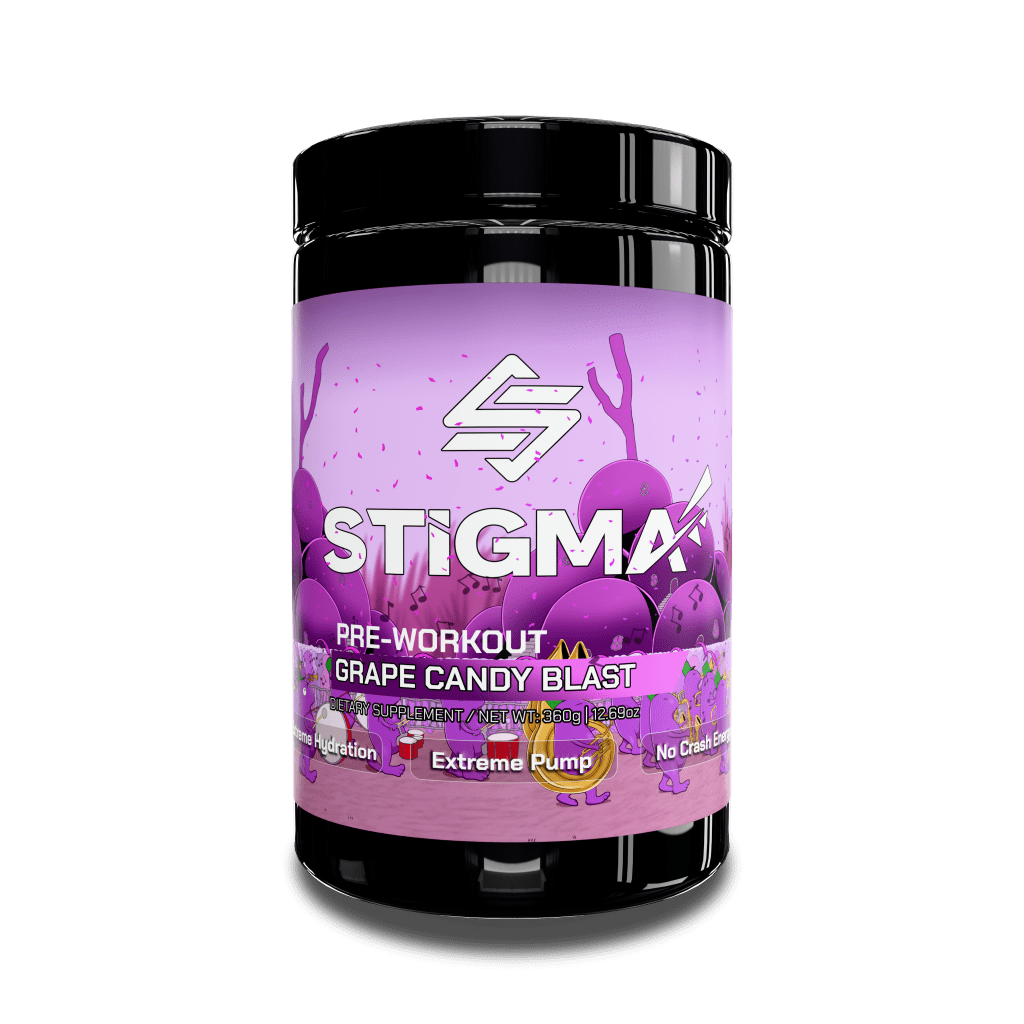
Pre-Workout
Fully-dosed pump and focus. Beta-alanine, tyrosine, taurine. No proprietary blends.
Shop Pre-Workout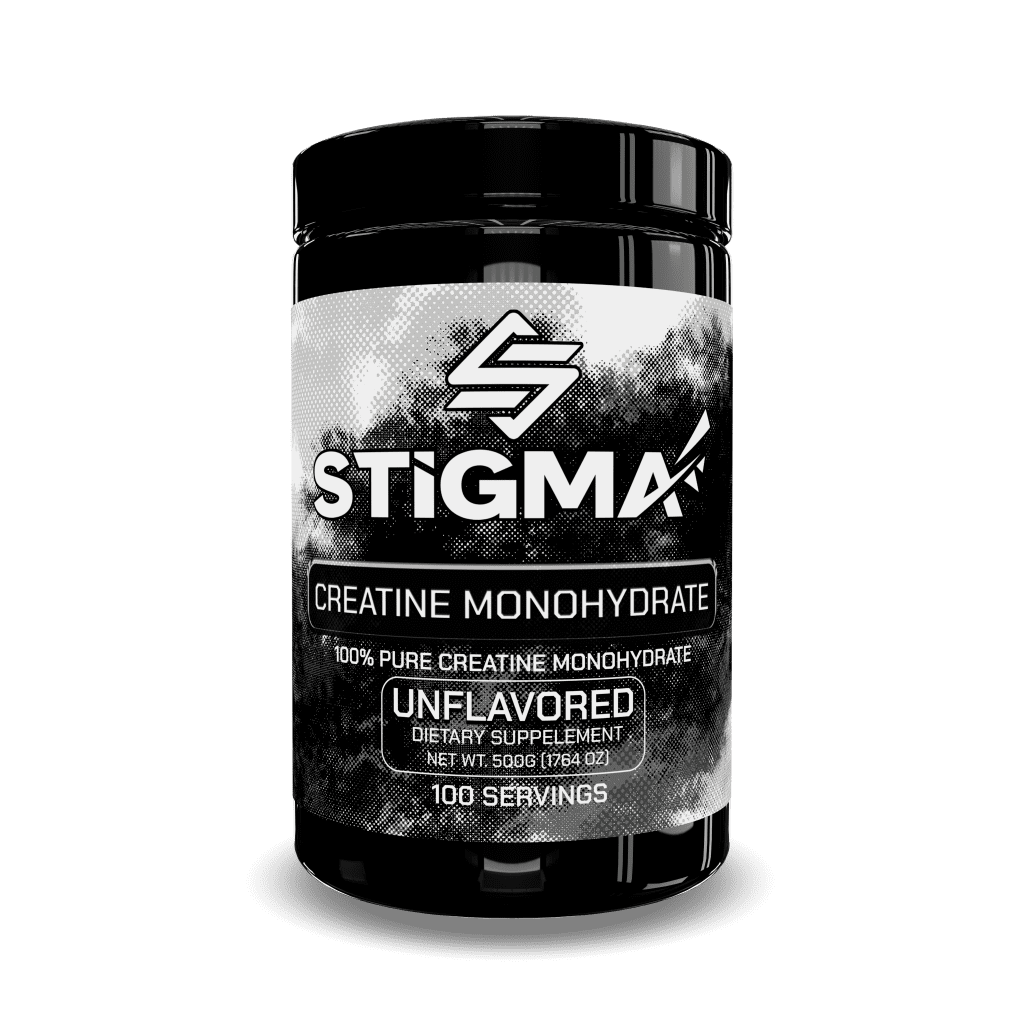
Creatine
100 servings of pure creatine monohydrate. Unflavored. Mixes clean in any shaker.
Shop CreatineHow creatine actually works at the cellular level
To understand why creatine and pre-workout aren’t redundant, it helps to understand what creatine does inside the muscle.
Every explosive muscle contraction (a heavy squat, a 100m sprint, a max-effort bench press) burns ATP for fuel. Each muscle cell has a small standing reserve of ATP, enough for about 2-3 seconds of all-out effort. After that, ATP has to be regenerated from ADP plus an inorganic phosphate.
That’s where creatine comes in. Inside the muscle cell, creatine combines with a phosphate to form phosphocreatine (PCr). When ATP runs low during a heavy set, phosphocreatine donates its phosphate group to ADP to rapidly regenerate ATP. The more phosphocreatine you have stored, the longer you can keep producing maximal force.
In a normal diet (1-2g of creatine daily from meat and fish), muscle stores sit at about 60-80% saturation. Daily supplementation with 5g raises that to 90-100% saturation. The result: more reps before failure, faster recovery between sets, more total volume per session, and over weeks and months, more muscle growth driven by the increased work capacity.
This is why creatine doesn’t feel like anything in the moment. It doesn’t stimulate your nervous system. It doesn’t open up blood vessels. It just gives your muscle cells more high-octane fuel to draw on when you ask them to perform.
Pre-workout, by contrast, works almost entirely outside the muscle cell. Caffeine blocks adenosine receptors in the brain, reducing perceived fatigue. Citrulline raises arginine and nitric oxide levels, dilating blood vessels and increasing blood flow. Beta-alanine raises muscle carnosine over time (so this one is actually slow-acting like creatine), buffering pH during high-rep work.
Different mechanisms, different timeframes, different effects. That’s why the stack works.
Pre-workout ingredients, ranked by what they actually do
Most pre-workouts list 8-15 ingredients on the label. Here’s what matters and what’s filler.
Tier 1: Ingredients with strong evidence
- Caffeine (150-400mg): The most studied performance enhancer in sports nutrition. Improves strength, endurance, and focus. 3-6mg per kg of body weight is the effective range. Cycling tolerance applies.
- L-citrulline / citrulline malate (6-8g): The pump and endurance king. The clinical dose is 6-8g, but many brands include 3-4g and call it dosed. Watch for the actual amount.
- Beta-alanine (3.2g daily): Increases muscle carnosine over 4-8 weeks. Best for high-rep training (8-25 reps per set). Causes the tingle, which is harmless.
Tier 2: Ingredients with decent evidence
- Betaine anhydrous (2.5g): Modest improvements in power output. Mostly used for cutting cycles.
- L-tyrosine (500-1,500mg): Helps with focus and mood under stress. Better at higher doses.
- Taurine (1-2g): Helps with cellular hydration and endurance. Often underdosed.
Tier 3: Ingredients with weak or mixed evidence
- AAKG (arginine alpha-ketoglutarate): Was hyped in the 2000s. Newer research shows citrulline raises arginine more efficiently. Mostly outdated.
- DMAE: Marketed for focus. Mixed evidence.
- Theanine (50-200mg): Smooths caffeine’s edge. Helpful but not essential.
- AlphaSize / Alpha-GPC (300-600mg): Focus ingredient. Some evidence for power output. Pricey.
Tier 4: Red flags
- Proprietary blends that don’t list individual doses. Means the brand is hiding under-dosing.
- “Pump matrices” or similar marketing words that obscure what’s actually in there.
- Yohimbine in stim-heavy formulas. Causes anxiety in many users. Not necessary.
- High-dose niacin (50mg+) used to create a fake flush so the product “feels strong.”
When evaluating a pre-workout, ignore the marketing copy. Look at the supplement facts panel. Count the Tier 1 ingredients at their effective doses. That’s all that matters.
The 12-week beginner protocol
If you’re new to either supplement, here’s a clean way to add both without overdoing it:
Weeks 1-2: Add creatine only
- 5g creatine monohydrate daily, any time
- No pre-workout yet
- Goal: Get used to taking a daily supplement, see how your stomach handles creatine
Weeks 3-4: Pre-workout on heavy days only
- Continue 5g creatine daily
- Start using pre-workout 2x per week on your hardest training days
- Use half a scoop the first time to assess tolerance
- Goal: Build tolerance gradually, learn how stimulants affect your training
Weeks 5-8: Full stack
- 5g creatine daily
- Pre-workout on all training days (skip light cardio days)
- Track strength benchmarks weekly (working sets on main lifts)
- Goal: See the saturation benefit of creatine plus the acute benefit of pre-workout
Weeks 9-12: Refine
- Continue creatine
- Cycle pre-workout: 4 weeks on, 1 week off (use stim-free or just creatine during break)
- Track sleep quality, training output, and recovery
- Goal: Find your personal sweet spot for stim use
By week 12, you’ll have a clear sense of what each supplement adds and how to use them sustainably. Most lifters who follow this protocol find creatine is the “always on” foundation and pre-workout is the situational tool for hard days.
What changes for women, older adults, and special populations
The basic stacking protocol works for most healthy adults, but a few groups need adjustments.
Women Creatine works the same in women as in men. The 2024 ISSN meta-analysis included studies on both sexes and found equivalent strength gains. Women often see slightly less initial water-weight gain on creatine because of lower starting muscle creatine stores, but long-term strength and lean mass benefits are equivalent.
Pre-workout caffeine sensitivity varies more by individual than by sex, but body weight matters. A 130lb woman taking a pre-workout dosed for a 200lb man will get more stimulant effect per pound. Start with half a scoop to assess tolerance.
Older adults (50+) Creatine has emerging evidence for benefits beyond athletic performance, including cognitive function, bone density, and sarcopenia prevention. A 2021 review published in JISSN noted that creatine supplementation in older adults supports lean mass retention during resistance training and may have cognitive benefits during sleep deprivation.
For caffeine, older adults metabolize it more slowly. The same dose stays in the system longer, which can disrupt sleep. Earlier pre-workout timing (5+ hours before bed) and lower caffeine doses (under 200mg) are usually better.
Vegetarians and vegans Creatine supplementation has larger effects in vegetarians and vegans because dietary creatine intake from meat and fish is near zero. Baseline muscle creatine stores are lower (50-60% saturation vs 60-80% in omnivores), so the supplemental jump is bigger. Plant-based athletes often report the most noticeable strength gains from creatine.
Stim-sensitive individuals If caffeine gives you anxiety, jitters, or sleep issues even at low doses, skip stim-based pre-workouts. A stim-free pre-workout (citrulline, beta-alanine, betaine, no caffeine) still provides pump and endurance benefits. Or stack creatine plus a separate moderate caffeine source (50-100mg from green tea, for example).
Cutting / weight-loss phases Creatine works the same in a calorie deficit. The slight water retention is intramuscular (inside muscle cells) and doesn’t show up as visible bloat. Don’t drop creatine during a cut; you’ll lose strength and training output along with the fat.
For pre-workout during a cut, caffeine has the side benefit of mild appetite suppression and increased calorie burn. Most cutters find pre-workout valuable for maintaining training intensity when energy is low from the deficit.
What about other supplements in the stack?
If you’re already taking creatine and pre-workout, the next supplements worth considering (in priority order):
1. Protein powder. If you’re not hitting 1.6-2.2g of protein per kg of body weight daily from food, a whey isolate or casein supplement covers the gap. This matters more for muscle growth than any pre-workout ingredient.
2. Electrolytes. If you sweat heavily, train fasted, or live somewhere hot, sodium and potassium replacement during training prevents the cramping and dizziness that derails sessions. This pairs especially well with pre-workout because citrulline-driven blood flow increases sweat rate.
3. Vitamin D3. Most lifters are deficient, especially in winter. 2,000-4,000 IU daily supports testosterone, recovery, and bone health. Cheap and high-impact.
4. Magnesium. Often deficient in active populations. Supports sleep, muscle relaxation, and recovery. 200-400mg of citrate or glycinate before bed.
5. Fish oil. 2-3g of combined EPA/DHA daily for inflammation and recovery.
That’s the full evidence-based stack for a serious lifter. Beyond these, you’re chasing marginal gains. Creatine and pre-workout cover the biggest two levers; protein, electrolytes, and the micronutrients above handle the rest.
Real-world stacking schedules
Three sample schedules based on different training styles:
The 4-day powerlifter (Mon/Tue/Thu/Fri training)
| Day | Morning | Pre-training | Notes |
|---|---|---|---|
| Mon | 5g creatine + coffee | 1 scoop pre-workout (heavy) | Squat day |
| Tue | 5g creatine + coffee | 1 scoop pre-workout (heavy) | Bench day |
| Wed | 5g creatine | None | Rest, walk |
| Thu | 5g creatine + coffee | 1 scoop pre-workout (heavy) | Deadlift day |
| Fri | 5g creatine + coffee | 1 scoop pre-workout (heavy) | Press day |
| Sat | 5g creatine | None | Active recovery |
| Sun | 5g creatine | None | Rest |
The 6-day bodybuilder (Mon-Sat training)
| Day | Morning | Pre-training | Notes |
|---|---|---|---|
| Mon | 5g creatine | 1 scoop pre-workout | Chest |
| Tue | 5g creatine | 1 scoop pre-workout | Back |
| Wed | 5g creatine | 1/2 scoop pre-workout | Legs (high volume, manage stim) |
| Thu | 5g creatine | 1/2 scoop pre-workout | Shoulders |
| Fri | 5g creatine | 1 scoop pre-workout | Arms (focus session) |
| Sat | 5g creatine | None (or stim-free pump pre-workout) | Legs again |
| Sun | 5g creatine | None | Rest |
Note: Daily stim use builds tolerance fast. The bodybuilder above is cycling half-doses on legs/shoulders specifically to keep stim sensitivity. After 6-8 weeks, take a full week off pre-workout and just stick to creatine.
The 3-day mom/dad lifter who also runs
| Day | Morning | Pre-training | Notes |
|---|---|---|---|
| Mon | 5g creatine | 1 scoop pre-workout | Lifting (full body) |
| Tue | 5g creatine | None | Easy 5k run |
| Wed | 5g creatine | 1 scoop pre-workout | Lifting (full body) |
| Thu | 5g creatine | None | Rest |
| Fri | 5g creatine | 1 scoop pre-workout | Lifting (full body) |
| Sat | 5g creatine | Coffee only | Long run |
| Sun | 5g creatine | None | Rest with family |
Note: Pre-workout for resistance training, plain coffee for runs. Caffeine for cardio works fine; the beta-alanine and citrulline in pre-workout are wasted on a long run.
The pattern across all three: creatine every day, pre-workout strategically on hard days only. That’s the entire stacking philosophy in one sentence.
Common mistakes when stacking
Five things lifters do wrong:
1. Cycling off creatine. Creatine doesn’t need cycling. The “load and cycle off” advice from 1990s bodybuilding magazines isn’t supported by current research. Take 5g daily indefinitely.
2. Taking pre-workout daily for stim energy. If you’re using pre-workout 6-7 days a week to feel awake, the workout boost is gone. Tolerance builds fast. Save it for hard training days.
3. Mixing pre-workout with coffee. Most pre-workouts already contain 200-400mg of caffeine. Adding coffee on top pushes most people past their effective dose into jitter territory. Pick one.
4. Using pre-workout for cardio. Caffeine helps endurance, but the beta-alanine and citrulline in most pre-workouts are designed for resistance training. For cardio specifically, plain caffeine works fine and is cheaper.
5. Skipping creatine because “I’m not trying to get huge.” Creatine improves training output regardless of your goal. If you train hard and want results, take it. The water retention myth (that creatine makes you puffy) is mostly about intracellular water inside the muscle cell, which is exactly what you want. Visible “puffiness” only happens in very lean athletes during loading phases.
The math: what does the stack actually cost?
For a serious lifter training 4 days per week:
| Item | Monthly cost |
|---|---|
| Creatine (5g daily × 30 days) | $5-8 |
| Pre-workout (4 servings × 4 weeks) | $24-40 |
| Total monthly stack | $29-48 |
For comparison:
- One gym membership: $30-100/month
- One personal training session: $80-150
- One protein shake from the smoothie place: $8
Supplements are the cheapest variable in the strength-training equation. The expensive part is the food, the gym, and the recovery time. If you’re paying for those, not stacking creatine and pre-workout is leaving real output on the table.
Frequently asked questions
Should I take creatine or pre-workout? Take both if you train 3+ times a week and care about results. Creatine builds long-term capacity. Pre-workout drives today’s training output. They don’t compete and they’re not redundant. If you only do one, take creatine because the long-term gains are larger and the cost is lower.
Can you take creatine and pre-workout together? Yes. They work through different mechanisms (creatine increases phosphocreatine stores at the cellular level; pre-workout works on the nervous system and circulation), so there’s no negative interaction. Most lifters mix 5g of creatine into their pre-workout shaker.
Does pre-workout have enough creatine? Usually no. Most pre-workouts contain 1-3g of creatine per scoop, which is under-dosed by 40-80% versus the clinical standard of 5g daily. You’d also only hit that dose on training days, not rest days. Take creatine separately for proper saturation.
Is creatine better than pre-workout? They solve different problems. Creatine has stronger long-term evidence for strength and muscle gain. Pre-workout has stronger acute evidence for training performance and pump. The right answer for most lifters is both, not one.
When should I take creatine if I’m also taking pre-workout? Whenever you’ll remember.
Grab the Stack